

| نویسندگان | Fereshteh Abbasi, Farshad Boorboor Ajdari, Mohammadreza Mansournia, Parnaz Asghari, Ali Molaei Aghdam |
|---|---|
| نشریه | Carbon Letters |
| شماره صفحات | 515 |
| شماره مجلد | 35 |
| ضریب تاثیر (IF) | 5.5 |
| نوع مقاله | Full Paper |
| تاریخ انتشار | 2025-03-18 |
| رتبه نشریه | علمی - پژوهشی |
| نوع نشریه | الکترونیکی |
| کشور محل چاپ | ایران |
| نمایه نشریه | JCR ,SCOPUS |
چکیده مقاله
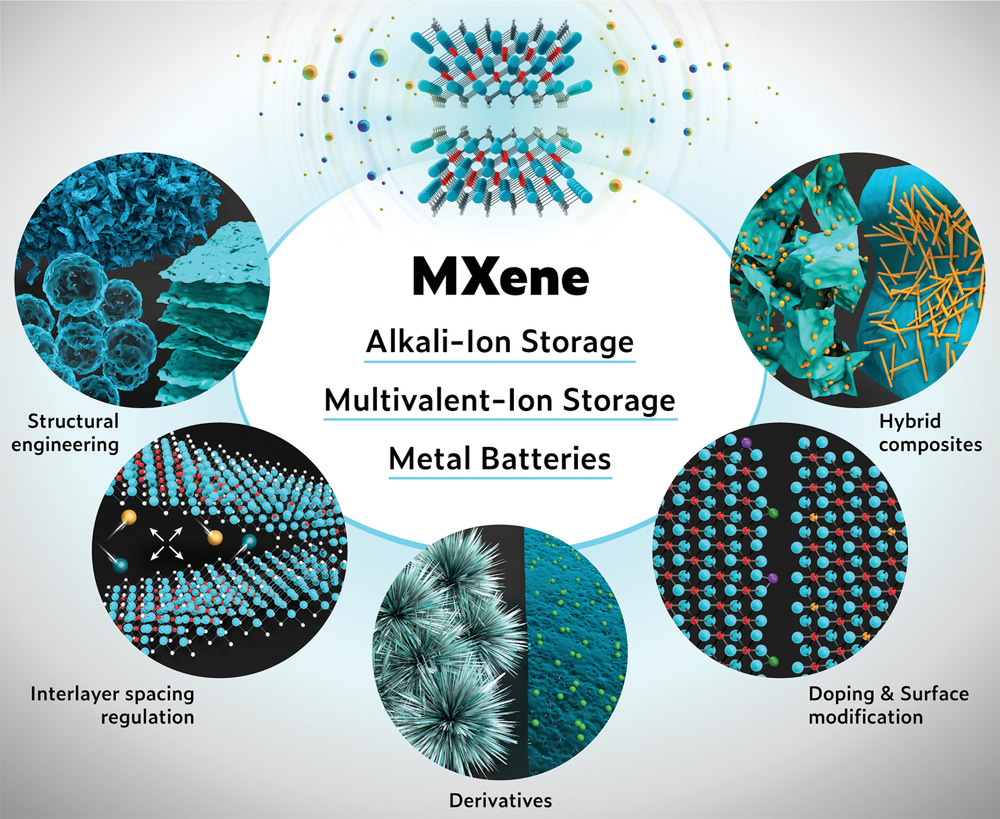
LTO is a commercial anode material that contributes to delivered energy and cycle stability. With affordability and high energy density, graphite faces limited cycle time and inferior stability. Here, we discussed the LTO challenges and compared the Ti-based anode from the original structure to the LTO-MXene composites, which are promising alternative anodes. Spinel lithium titanate (LTO) possesses high working voltage, stability, safety, and negligible volume change, while it suffers from low electronic conductivity that limits rate performance at large current densities. 2D Mxenes have recently drawn attention to various applications due to high conductivity, large surface area, flexibility, and polar surface benefits. We critically reviewed the synthesis approaches, morphology views, and electrochemical behavior of LTO-MXene as new anode materials in lithium-ion batteries (LIBs). There are few reports on LTO-MXene anodes in LIBs. They provide a synergistic action of LTO and MXene, enhancing the accessibility of electrolytes and reducing the distance, benefiting fast diffusion. This review paper sheds light on how the synthesis approaches can directly affect LIB configurations' durability and energy density and lead researchers to develop features of LTO anodes with promising engagement.