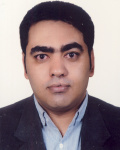

Biography
Hamid Malekzadeh is a political theorist whose work lies at the intersection of political theory and phenomenology. His research is primarily concerned with the lifeworld, embodiment, intersubjectivity, political subjectivity, freedom, the state, and the conditions under which shared social life becomes possible and sustainable.
A central concern of his work is the phenomenological reconstruction of the political beyond state-centered approaches to political ontology. Drawing primarily on Edmund Husserl and the phenomenological tradition, he examines political life from the standpoint of a world already constituted through embodied experience, intersubjective relations, shared meanings, habitual expectations, and forms of coexistence prior to their formal organization by political institutions. This line of inquiry asks how the state, political power, and institutional order should be understood once the lifeworld rather than the state itself is taken as the point of departure.
Another strand of his research concerns embodiment, sexual difference, and feminist phenomenology, particularly the possibilities opened by gendered readings of Husserlian phenomenology. He also works on the history of political thought, especially Machiavelli, Hobbes, Locke, Rousseau, Carl Schmitt, Gramsci, and debates concerning the conceptual foundations of modern political order.
Research Interests
Political Theory; Political Phenomenology; Edmund Husserl; Lifeworld; Intersubjectivity; Embodiment; Political Subjectivity; Freedom and Recognition; The Political; State and Political Ontology; Critiques of State-Centered Political Theory; Feminist Phenomenology; Sexual Difference; History of Political Thought; Machiavelli; Hobbes; Locke; Rousseau; Carl Schmitt; Iranian Political Theory; Governance and Sustainable Social Life; Peace and the Metaphysics of the State.
Current Research
His current research develops a phenomenological approach to political order by shifting the analytical starting point from the state to the lifeworld. The central question is how political institutions, forms of power, and practices of governance affect the conditions under which individuals can continue to inhabit a shared world, form expectations about the future, pursue their purposes, and sustain relations of mutual dependence.
Within this broader research programme, he is developing the concept of the conditions of sustainable social life as a way of examining the relationship between political order and lived experience. This involves investigating the gap that may emerge between the formal functions of institutions and their experienced effects, as well as the ways in which political interventions reorganize the practical horizons within which social life takes place.
A parallel line of research returns to major figures in the history of political thought—particularly Machiavelli, Hobbes, Locke, and Rousseau—to examine political order in relation to the problem of life rather than treating the history of political thought simply as a succession of theories of sovereignty or the state. His recent work also addresses the political ontology of the modern state, the search for political recognition, and the metaphysical presuppositions that shape modern conceptions of peace.
Academic Engagement
Alongside his research, Malekzadeh has been active in scholarly translation, academic editing, professional associations, academic conferences, invited lectures, and forms of public scholarship intended to bring political theory into conversation with contemporary political and social questions.
His academic activities have included sustained engagement with phenomenology through scholarly associations and editorial work, as well as the translation and introduction of phenomenological texts into Persian. He has also contributed to public discussions of political concepts through essays, lectures, and radio programmes concerned with the conceptual vocabulary of politics.
International Collaboration
He welcomes international academic collaboration in political theory and phenomenology, particularly on projects concerning the lifeworld, embodiment, intersubjectivity, political ontology, the modern state, political subjectivity, peace, recognition, and the phenomenological foundations of political life.
Education
| Degree | Graduated in | Major | University |
|---|---|---|---|
| Ph.D | 2018 | Political Science (Political Thought / Political Theory) | University of Tehran |
| MSc | 2011 | Political Science (Political Thought / Political Theory) | University of Tehran |
| BSc | 2008 | Political Science | University of Tehran |
Employment Information
| Faculty/Department | Position/Rank | Employment Type | Cooperation Type | Grade |
|---|---|---|---|---|
| University of Kashan | Assistant Professor of Political Science | Tenured | Full Time | 8 |
Work Experience
Scientific and Executive Activities
|
Position / Activity |
Organization |
Period |
|
Scientific and Executive Secretary |
Iranian Society for Phenomenology, Iranian Political Science Association |
2017–present |
|
Scientific and Executive Secretary, Philosophy, Ethics and Peace Committee |
Iranian Peace Studies Scientific Association |
2019–2021 |
|
Co-Editor, The Iranian Yearbook of Phenomenology |
Iranian Society for Phenomenology / Gam-e No Publishing |
2024–present |
|
Academic Editor and Host, The Alphabet of Politics Radio Series |
Iranian Society for Phenomenology / Radio Goftogoo, IRIB |
2024–2025 |
|
Scientific Council Member, International Open Seminar on Semiotics |
Instituto de Estudos Filosóficos, University of Coimbra / collaborating academic institutions |
2022 |
|
Scientific Committee Member, International Conference on Political Science, Women’s Studies and the Future |
Iranian Political Science Association |
2021 |
|
Academic Reviewer / Member of the Reviewing Council |
Council for Reviewing Texts and Books in the Humanities, Institute for Humanities and Cultural Studies |
2014–present |
Subjects Taught
Specialized Teaching Subjects
|
Specialized Teaching Subject |
Description |
|
Political Theory |
Classical and contemporary approaches to political concepts, institutions, authority, freedom, and political order. |
|
History of Political Thought |
Major traditions and thinkers in ancient, modern, and contemporary political thought. |
|
Twentieth-Century Political Thought |
Major political thinkers, intellectual traditions, and conceptual debates of the twentieth century. |
|
Political Phenomenology |
Phenomenological approaches to the political, lifeworld, embodiment, intersubjectivity, and political subjectivity. |
|
State Theory and Political Ontology |
Theories of the modern state, sovereignty, political order, and state-centered and non-state-centered political ontologies. |
|
Research Methodology in Political Science |
Problem formulation, research design, conceptual frameworks, qualitative methods, textual analysis, and academic writing. |
|
Research Methodology in Law |
Research design, legal research questions, source evaluation, qualitative analysis, and analysis of judicial decisions. |
|
Political Concepts and Conceptual Analysis |
Conceptual study of the state, sovereignty, freedom, authority, representation, citizenship, the political, and related concepts. |
Executions And Scientific Activities
Scientific and Executive Activities
|
Position / Activity |
Organization |
Period |
|
Scientific and Executive Secretary |
Iranian Society for Phenomenology, Iranian Political Science Association |
2017–present |
|
Scientific and Executive Secretary, Philosophy, Ethics and Peace Committee |
Iranian Peace Studies Scientific Association |
2019–2021 |
|
Co-Editor, The Iranian Yearbook of Phenomenology |
Iranian Society for Phenomenology / Gam-e No Publishing |
2024–present |
|
Academic Editor and Host, The Alphabet of Politics Radio Series |
Iranian Society for Phenomenology / Radio Goftogoo, IRIB |
2024–2025 |
|
Scientific Council Member, International Open Seminar on Semiotics |
Instituto de Estudos Filosóficos, University of Coimbra / collaborating academic institutions |
2022 |
|
Scientific Committee Member, International Conference on Political Science, Women’s Studies and the Future |
Iranian Political Science Association |
2021 |
|
Academic Reviewer / Member of the Reviewing Council |
Council for Reviewing Texts and Books in the Humanities, Institute for Humanities and Cultural Studies |
2014–present |
Course Topics
Teaching Areas
|
Teaching Area |
Main Focus |
|
Political Theory and Political Philosophy |
Normative and conceptual problems of political life, authority, freedom, order, and collective existence. |
|
History of Political Thought |
Machiavelli, Hobbes, Locke, Rousseau, Carl Schmitt, Gramsci, and major traditions of modern political thought. |
|
Contemporary Political Theory |
Twentieth- and twenty-first-century debates on the political, democracy, power, subjectivity, and political order. |
|
Phenomenology and Politics |
Husserl, lifeworld, intersubjectivity, embodiment, political subjectivity, and phenomenological approaches to political life. |
|
Theory of the State |
State formation, sovereignty, political personhood, state-centered political theory, and critiques of the modern state. |
|
Political Concepts |
State, sovereignty, representation, freedom, citizenship, authority, recognition, and the political. |
|
Research Methods in the Humanities and Social Sciences |
Research design, qualitative inquiry, conceptual analysis, textual interpretation, and academic writing. |
|
Political Thought and Social Life |
Political order in relation to lived experience, shared social life, governance, and the conditions of sustainable social life. |
Workshops
Workshops, Seminars and Invited Academic Talks
|
Title |
Type |
Host / Organization |
Year |
|
Workshop on Jurisprudence and Governance in Contemporary Iran |
Workshop |
Omid-e Iranian Cultural and Social Foundation, Lenjan |
2018 |
|
Husserl and the Political |
Invited Talk / Seminar |
Iranian Political Science Association |
2019 |
|
An Introduction to the Limits of Politics: From Power to Anarchism and Its Lessons for Iran and the Middle East |
Invited Talk / Seminar |
Center for Middle East Strategic Studies |
2020 |
|
Phenomenology and the Question of Iran |
Invited Talk / Seminar |
Iranian Political Science Association |
2020 |
|
Cinema and Politics: Woody Allen, Life, Love, and Death |
Invited Talk / Seminar |
Literature and Politics Committee, Iranian Political Science Association |
2020 |
|
The Ontological Basis of Politics in Firhi’s Thought |
Invited Talk / Seminar |
Iranian Political Science Association |
2020 |
|
Luciferism, Peace, and Violence from a Phenomenological Perspective |
Invited Talk / Seminar |
Iranian Political Science Association / Iranian Peace Studies Scientific Association |
2021 |
|
Embodiment and the Transcendental Foundation of Politics |
Invited Talk / Seminar |
University of Tehran |
2018 |
Conferences
Conferences and Academic Events Organized / Co-Organized
|
Role |
Conference / Event |
Organization |
Year |
|
Scientific Council Member |
International Open Seminar on Semiotics: A Tribute to John Deely on the Fifth Anniversary of His Passing |
Instituto de Estudos Filosóficos, University of Coimbra / collaborating academic institutions |
2022 |
|
Scientific Committee Member |
International Conference on Political Science, Women’s Studies and the Future |
Iranian Political Science Association |
2021 |
Membership in Scientific Societies
Membership in National and International Scientific Societies
|
Membership / Role |
Scientific Society |
Period |
|
Member |
Iranian Political Science Association |
2017–present |
|
Founding Member |
Iranian Society for Phenomenology, Iranian Political Science Association |
2017–present |