CV


FA
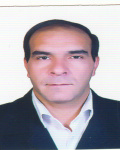
Abbas Zare-ee

Abbas Zare-ee

Associate Professor

Full-Time Faculty Member

zare-ee72@kashanu.ac.ir

College: Faculty of Literature and Foreign Languages

Department: English Language and Literature

Degree: Ph.D

Birth Year: 1971

CV
FA
Abbas Zare-ee

Associate Professor Abbas Zare-ee

Full-Time Faculty Member zare-ee72@kashanu.ac.ir
College: Faculty of Literature and Foreign Languages - Department: English Language and Literature Degree: Ph.D | Birth Year: 1971 |

Abbas Zare-ee (zare-ee72@kashanu.ac.ir) is a full-time associate professor in Teaching English as a Foreign Language (TEFL) at the University of Kashan, Iran. He completed his Ph.D in Iran with research attatchemts/visits at the University of Reading, University of Malaya, and the University of Sheffield. He holds BA, MA, Ph.D., Post Doc, and international certificates in TEFL. His research interests are issues in TEFL/SLA, L2 writing and teaching English language skills. He supervises MA students of TEFL and teaches TEFL-related courses. Tel: 00983155912731 Fax: 00983155511121 & 00983155912772

My affiliation

University of Kashan
Show More

Syntactic Complexity Development in Research Articles Over 25 Years: A Comparative Case Study of a Native and a Non-Native Applied Linguist

Authorsعباس زارعی تجره,زهرا فلاح کردی
JournalApplied Research on English Language
IFثبت نشده
Paper TypeFull Paper
Published At2026-09-28
Journal GradeScientific - research
Journal TypeElectronic
Journal CountryIran, Islamic Republic Of
Journal IndexISC ,ISI-Listed ,SCOPUS
KeywordsKeywords: EFL Writing, English for Academic Purposes (EAP), English for Research Publication Purposes (ERPP), Retrospective Case Study, Syntactic Complexity.

Abstract

Guided by the skill acquisition theory, this study examined syntactic complexity over two decades in the articles published by a native and a non-native scholar, focusing on changes in 14 syntactic measures. The aim was to document change over time and an increase in writing experience. Applying a retrospective case study design, the researchers analyzed abstracts and conclusions of 75 articles written from 2000 to 2024, using the L2 Syntactic Complexity Analyzer (L2SCA), a web-based tool that calculates syntactic complexity. We analyzed the resulting numerical data using linear regression to identify trends in syntactic change.